Historical Repetition?: Will Nuclear Propulsion Follow Steam Propulsion?
These are not the comments of people with a vested interest in nuclear power. They are the words of professional mariners and historians who understand the importance of propulsion machinery in ocean commerce.
The following is a sampling of comments on nuclear merchant ships from before 1973.
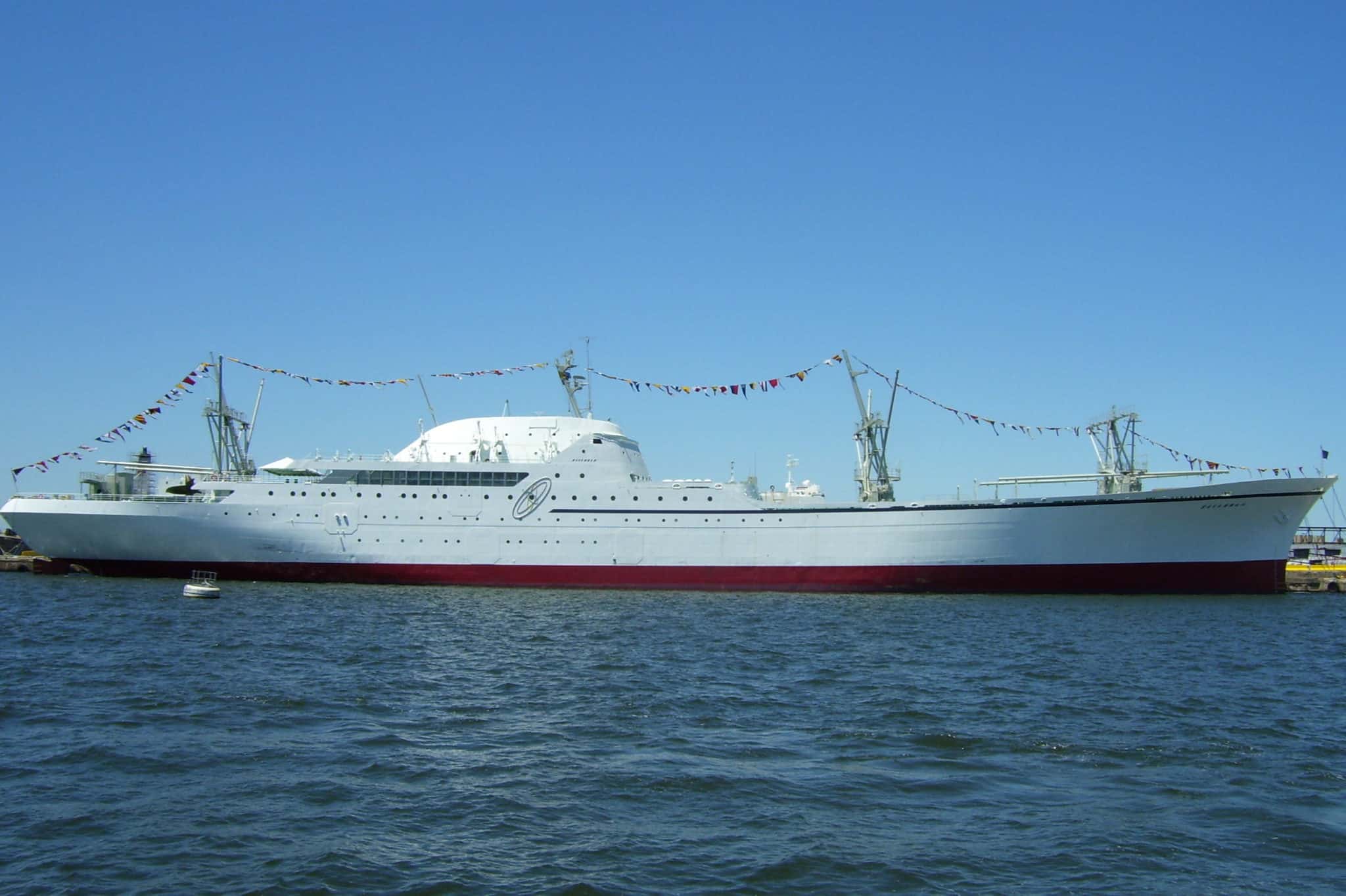
Here are the observations of retired ship captain Alan Villiers, the National Geographic observer during the N.S. Savannah’s sea trials in 1962, “I stood on the Savannah‘s swept-back superstructure as she moved out into the Atlantic. She slipped along at an effortless 17 knots with only 60 percent power. I heard no noise save the swish of water along her sides. She was clean as a sailing ship; the nuclear plant gave off no smut or smoke or exhaust.”
He continued, “This is the ship that may revolutionize the world’s merchant fleets. Atomic freighters like her will be able to go wherever there is water to float them, with no wayside stops for fuel, no waste of space for coal or oil. The Savannah may bring back to the sea the freedom and endurance of sailing ships that seemed forever lost when steam took over.”
Holmes F. Crouch, author of Nuclear Ship Propulsion, published in 1960 by the Cornell Maritime Press, wrote, “Nuclear power can benefit merchant ships most significantly in those areas that are beyond the capabilities of existing-type ships.”
Limitless Capabilities
The example that he uses is the high-speed passenger ship. “The limitations of oil fuel have a profound effect upon large, fast, passenger ships. Take the Queen Mary, for example: 200,000 SHP (shaft horsepower) are required to push her 83,000 tons across the Atlantic at 32 knots. That means she gulps down 50 tons of fuel per hour! In one voyage (6000 miles), she consumes 10,000 tons of fuel oil . . . or better than 12 percent of her total weight in fuel alone.”
He continued the thought. “If the Queen Mary or United States were nuclear fueled, an Atlantic voyage would consume a mere 10 pounds of U-235. Consequently, it is self-evident that these large, fast ships are the first logical candidates for nuclear fuel. With nuclear fuel, they could go anyplace in the world . . . at their maximum propeller speeds. This they cannot now do. They use oil.”
Rowland F. Pocock, author of a different book titled Nuclear Ship Propulsion, published in 1970 by Ian Allan in London,wrote seriously about the possibilities of nuclear powered commercial submarines. “Nevertheless, the Arctic Ocean cannot be ignored as a trade route, even if it is open for only a limited season every year. The existing surface route from London to Tokyo is 11,200 miles. A submarine route across the North Pole would be only 6,500 miles long. The potential savings in time is obvious, while the high speeds of submarines relative to surface vessels would make this route even more advantageous.”
These not the comments of people with a vested interest in nuclear power. They are the words of professional mariners and historians who understand the importance of propulsion machinery in ocean commerce.
Captain Villiers understood the history behind Savannah‘s name. “I smiled as I thought of the first Savannah, the little pioneer steamship of nearly a century and a half before. Packed to the gunwales with wood and coal, she could chug along less than four days. The strange, blustering power of the little paddle-wheeler attracted some, scared off others. So does the new silent power of this big atomic merchantman. Most people can’t wait to get aboard her just for the thrill of it. But some fear that there might be radioactivity or the danger of an atomic explosion.”
A Repeat Performace?
After a brief period of operation and cruising, the first Savannah was put aside as the Age of Sail continued for several decades. At the time, people considered the little steamship to have been a dismal failure. By the 1880s, however, there was little doubt that steam was far more capable than sails for commercial ships.
In comparison, the nuclear ship Savannah was laid up over 20 years ago. Much has changed in the world of commerce since her demise. Some of the changes should encourage a new look at nuclear propulsion. These relevant changes include the increased cost of oil, the increased concerns about air pollution, the increased emphasis on high speed shipping, the increased length of many world trade routes and the dramatic increase in the size of the average ship involved in international trade. Perhaps it is time for history to repeat itself.
Update posted on March 31, 2009: The N/S SAVANNAH ASSOCIATES, INC. has just posted a beautiful web site with historical details about the ship, her history and the current effort to recondition and protect her. If you are interested in learning more or in signing up for a mailing list of people interested in the ship, visit wwww.nssavannah.net.
Upate posted on April 2, 2011 The below video was shot in the Baltimore harbor in the summer of 2010. It shows the current exterior condition of the NS Savannah after a recent refurbish, paint and polish effort.