Constant Exposure: How Much Radiation is Normal?
Everyone on earth is continually exposed to radiation. It comes from the certain isotopes of carbon and potassium in the food we eat, from cosmic radiation, from radon gas and from the decay of naturally occurring uranium, thorium and their decay products.
Radiation: A Part of Daily Life
There is a wide variation in the amount of natural background radiation. Your personal exposure is a function of where you live, what you eat, whether or not you smoke, how your house is constructed, how much time you spend in airplanes and how many medical procedures involving x-rays you undergo.
Since radiation is a natural component of our environment, it is rather logical to assume that our bodies have developed ways of coping with levels within natural variations.
How Your Body Reacts
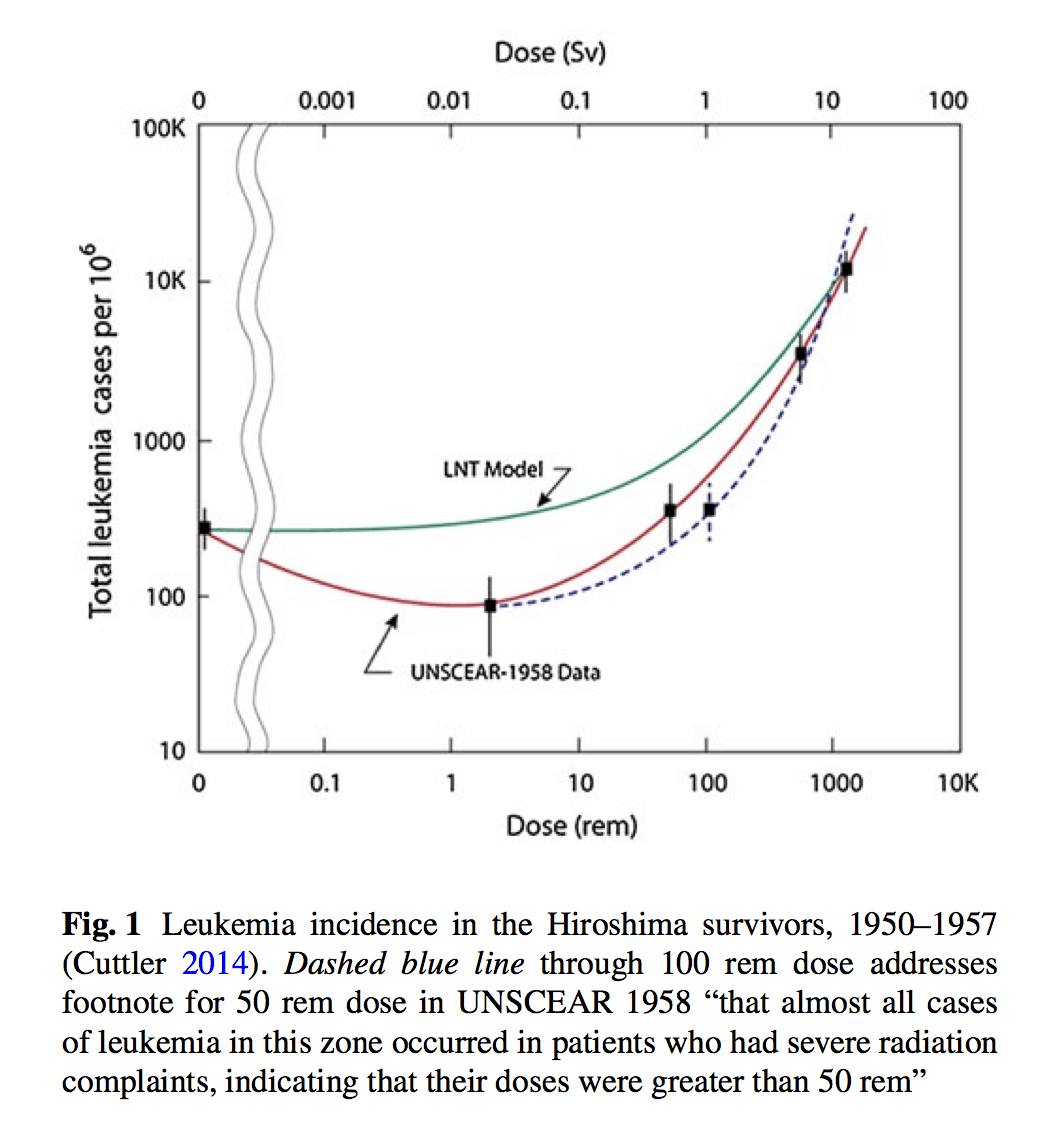
Numerous studies have indicated the accuracy of this assumption. Seven states in the western United States have background radiation levels that are 50-100 percent higher than the national average. The death rate from cancer in those states is 15 percent lower than the national average.
In a 20 year study of a population of 25,000 in China, half of which were from an area with twice the background level that the control group experienced, the cancer death rate was slightly lower in the high background area. In a 35 year study of a population of 70,000 people in India with average exposures from background radiation that are three times higher than the world-wide average, no statistically significant health effects were found.
A Japanese study involving more than 7 million people found no correlation between increases in background radiation exposure and increases in health effects.
Both logic and evidence support the assertion that people in general have nothing to worry about if their routine radiation exposure varies within a factor of as much as three from the world-wide average.
How Much is Too Much
The following table summarizes recent estimates of the doses from the various sources of radiation. (mSv/yr)
| Source | Britain | US |
|---|---|---|
| radon | 1.3 | 2.0 |
| gamma from rocks | 0.35 | 0.28 |
| materials in food and drink | 0.3 | 0.39 |
| medical procedures | 0.3 | 0.53 |
| cosmic radiation | 0.25 | 0.27 |
| miscellaneous | 0.01 | 0.09 |
| fall-out (incl Chernobyl) | 0.01 | 0.0006 |
| occupational exposure | 0.005 | 0.009 |
| nuclear plants | 0.001 | 0.0005 |
| totals | 2.5 mSv/yr | 3.5 mSv/yr |
Here is the kicker. The people designing nuclear fuel storage areas are required to show that no member of the population will receive in excess of 0.25 mSv/yr under a worst case release scenario. Billions of dollars are being wasted in an effort to protect us from a radiation source that would add less than 10 percent to the natural dose for the most exposed person.